Turning Client Conversations Into a Roadmap That Closed a Deal
Research-Driven Feature Strategy — Game Caviar. As the company's only product designer, I ran the only research function at the company — client interviews that did double duty, validating features already in progress while building the broader picture of how publishers actually work. That research surfaced two priorities, and one of them moved a publisher from live demo straight to contract review the same day.
Contents
Highlights
- 0.1Advanced Search — combinable multi-criteria search built on existing APIs, shipped at 40 engineering points vs. 93+ for just the next phase
- 0.2Full Screen Profile — four-tab provider view taken from re-prioritized to delivered in roughly three months
- 0.3Diligence ratings — five consistent categories, designed to scale into future project-linked reviews
- 0.4Dashboard/Financials concept work used across publisher and investor pitches, including Microsoft/Xbox
The situation
Research had to do double duty.
No dedicated research function, and no bandwidth for throwaway concepts.
Game Caviar connects game developers and publishers with vetted service providers. Beyond the design-system work happening in parallel, my other core focus was figuring out what to actually build next. With a small engineering team, every feature choice carried real opportunity cost, and how I weighed those tradeoffs is on How I Operate. I initiated and ran client interviews myself, the only research being done at the company, using them for two purposes at once: testing features already in progress, and building a broader picture of how publishers actually work, both inside and outside our tool. That research directly shaped the feature roadmap I proposed and then designed.
The approach · Initiative one
A stepping stone, not a detour.
Exact-match search couldn't handle a misspelled name, let alone a combination of specific needs.
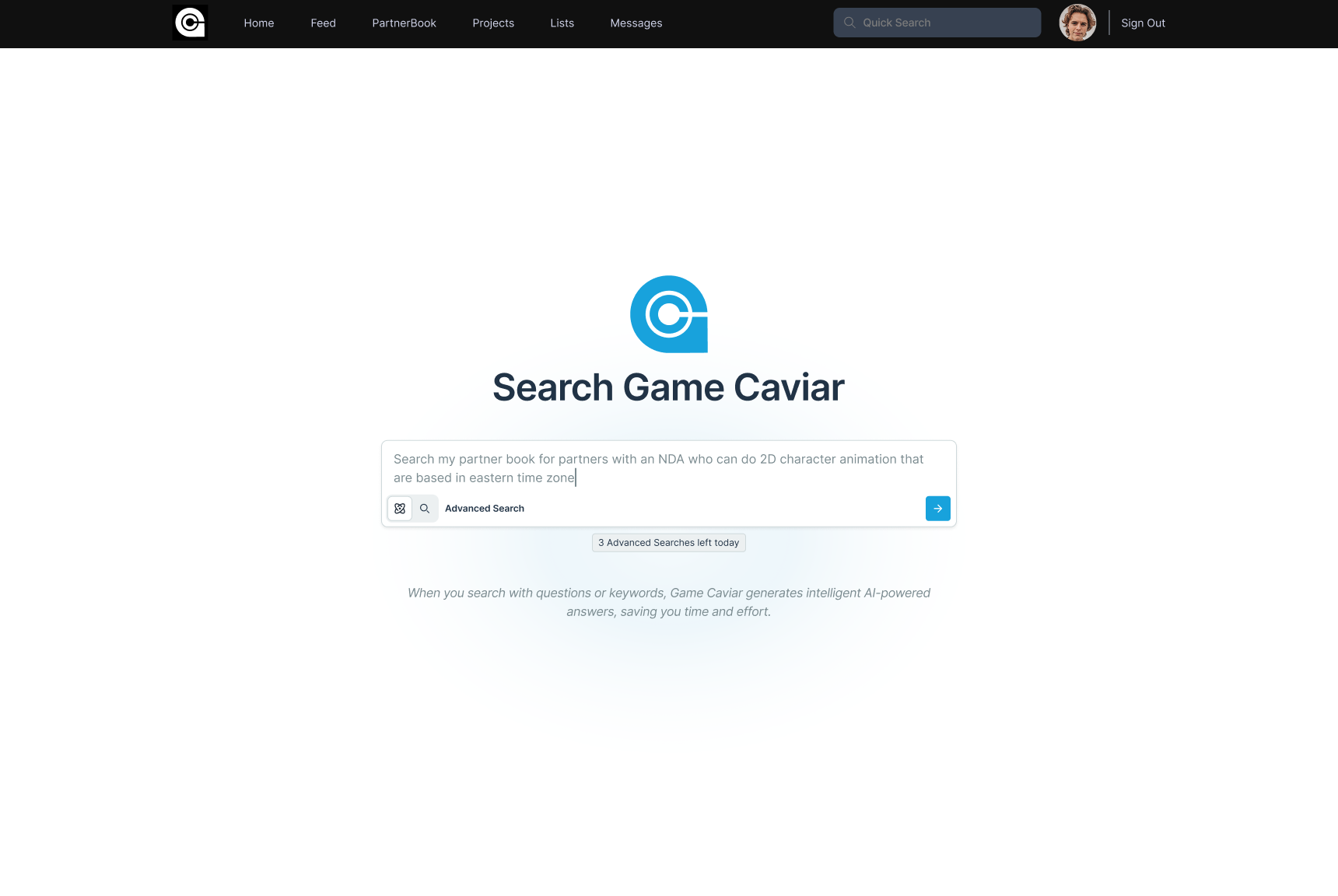
We had a clear long-term vision for an internal agentic AI tool, and knew it could generate real excitement with both publishers and investors. But building and training a stack we'd be comfortable releasing was going to take real time — time we didn't have if we wanted to make progress now. Rather than wait, I proposed building the foundation first: tapping into existing APIs to power a more limited but immediately useful capability. Publishers could now search by specific, combinable criteria — say, companies offering Art Direction for a 2D first-person shooter — and get a precise, relevant list back, rather than scrolling an unfiltered list or searching one exact company at a time.
1.0Advanced Search prototype — Figma Make screen recording
I concepted and prototyped the interaction in Figma Make with an MVP mindset throughout, covering the full experience — loading states, results, actionable items like sharing, error states, and usage limits — while minimizing front-end engineering lift. The version we shipped was sized at 40 points of engineering work. The next iteration alone, still just one phase further and not the full agentic vision, is already sized at 93 points, with the full build not yet sized at all. That gap gives a real sense of scale: a genuinely useful first step, at a fraction of the cost of what full agentic search will eventually require.
Underneath, the "existing APIs" approach meant orchestrating rather than building from scratch: a webhook receives the query, guardrails sanitize the input, and an AI agent — built on an off-the-shelf chat model plus a search tool, constrained by a filter schema — turns it into structured results. Automated evaluations check the output at each branch (guardrail failure, agent failure, happy path) before a response goes back to the user. That's the distinction that made the 40-point estimate possible: composing existing pieces instead of training and hosting a custom model.
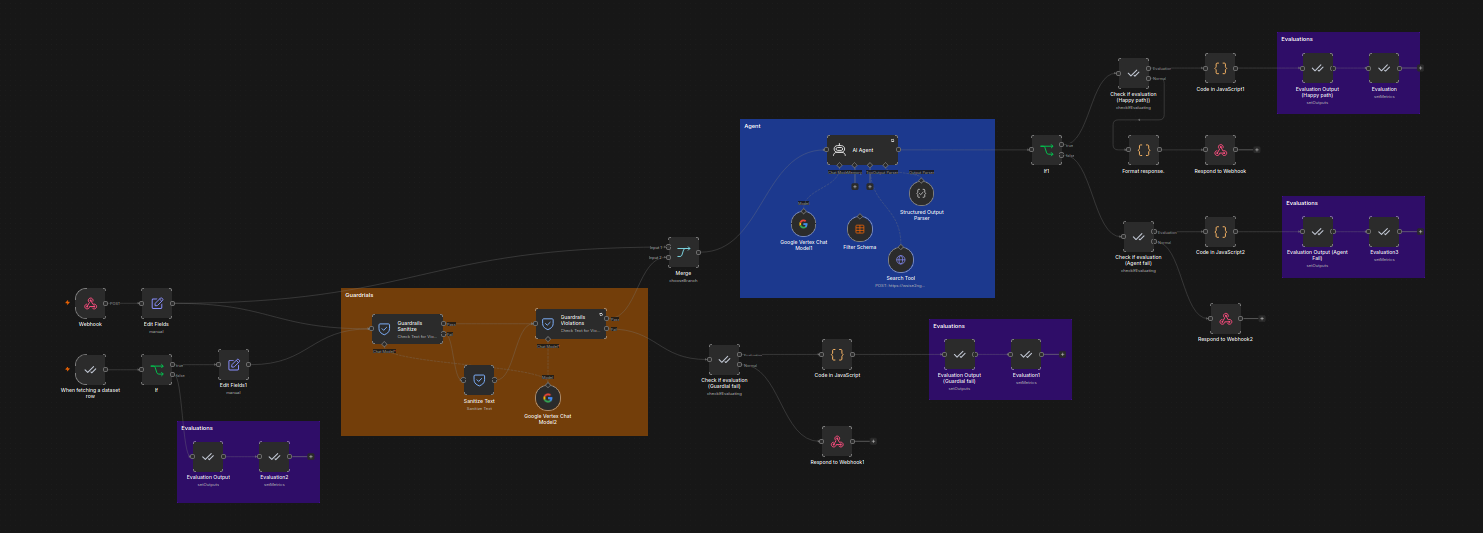
1.1Advanced Search — orchestration workflow (webhook → guardrails → agent → evaluations)
The approach · Initiative two
The tab that moved a publisher to contract.
A feature backlogged for a year, re-prioritized the moment a publisher named it as a requirement.
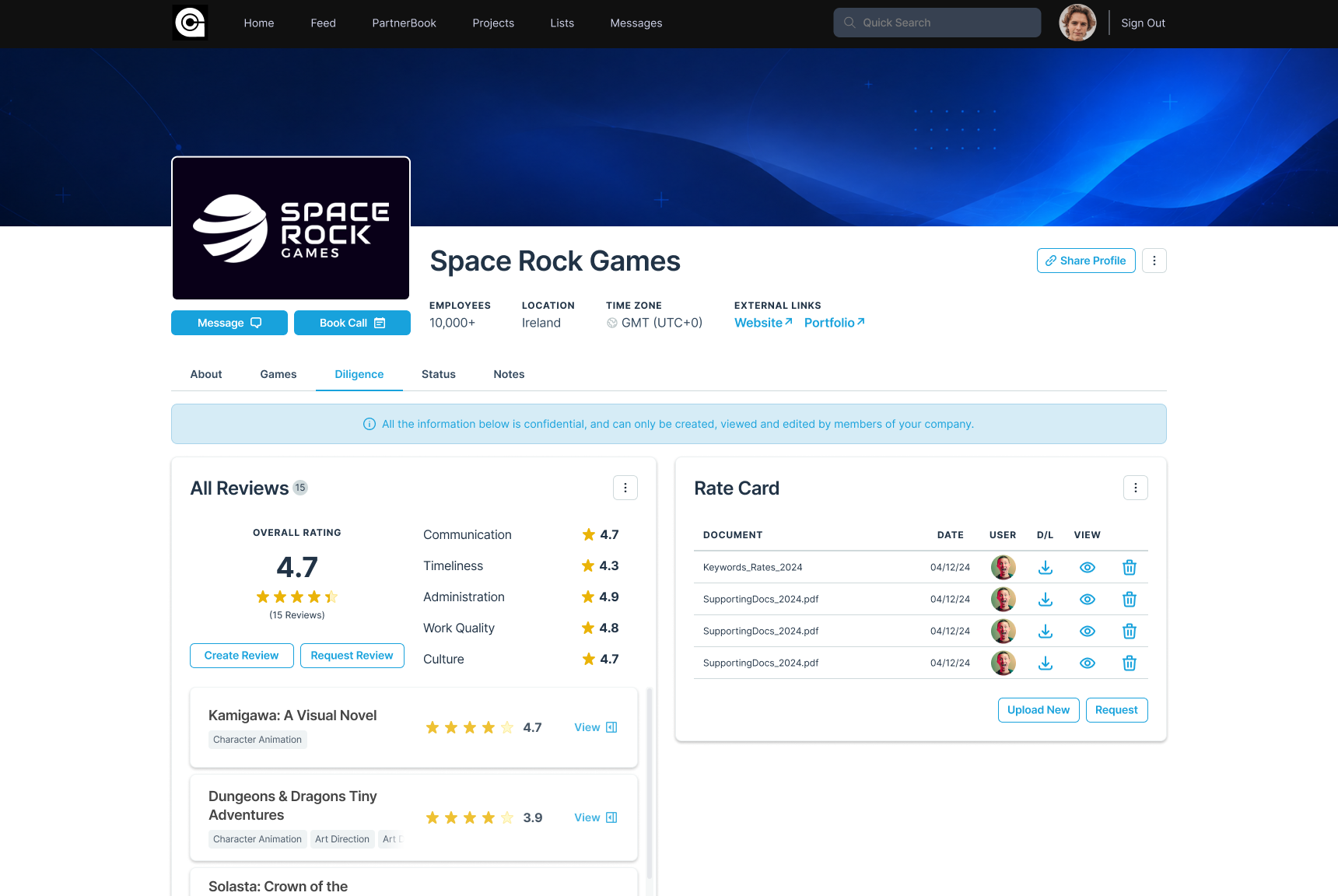
The Full Screen Profile had been identified through research and backlogged — until a publisher told us directly it was a requirement before they'd commit to our pilot program. That conversation, in May, re-prioritized it immediately. It gives publishers a complete view of a service provider across five tabs: About, Games, Diligence, and Status, which tracks key legal and compliance documents like MSAs and NDAs, plus a private Notes tab for a publisher's own tracking, visible only to their company.
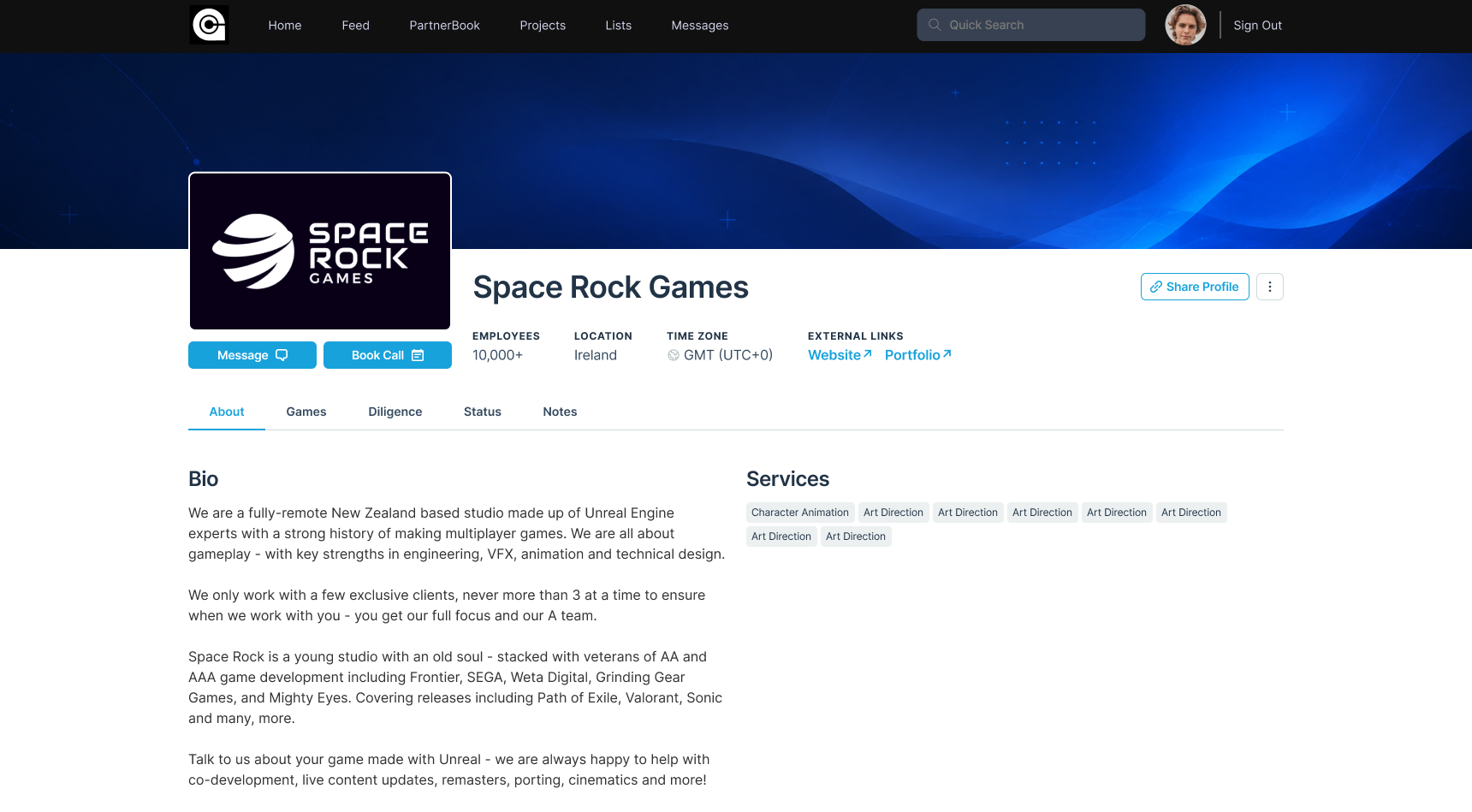
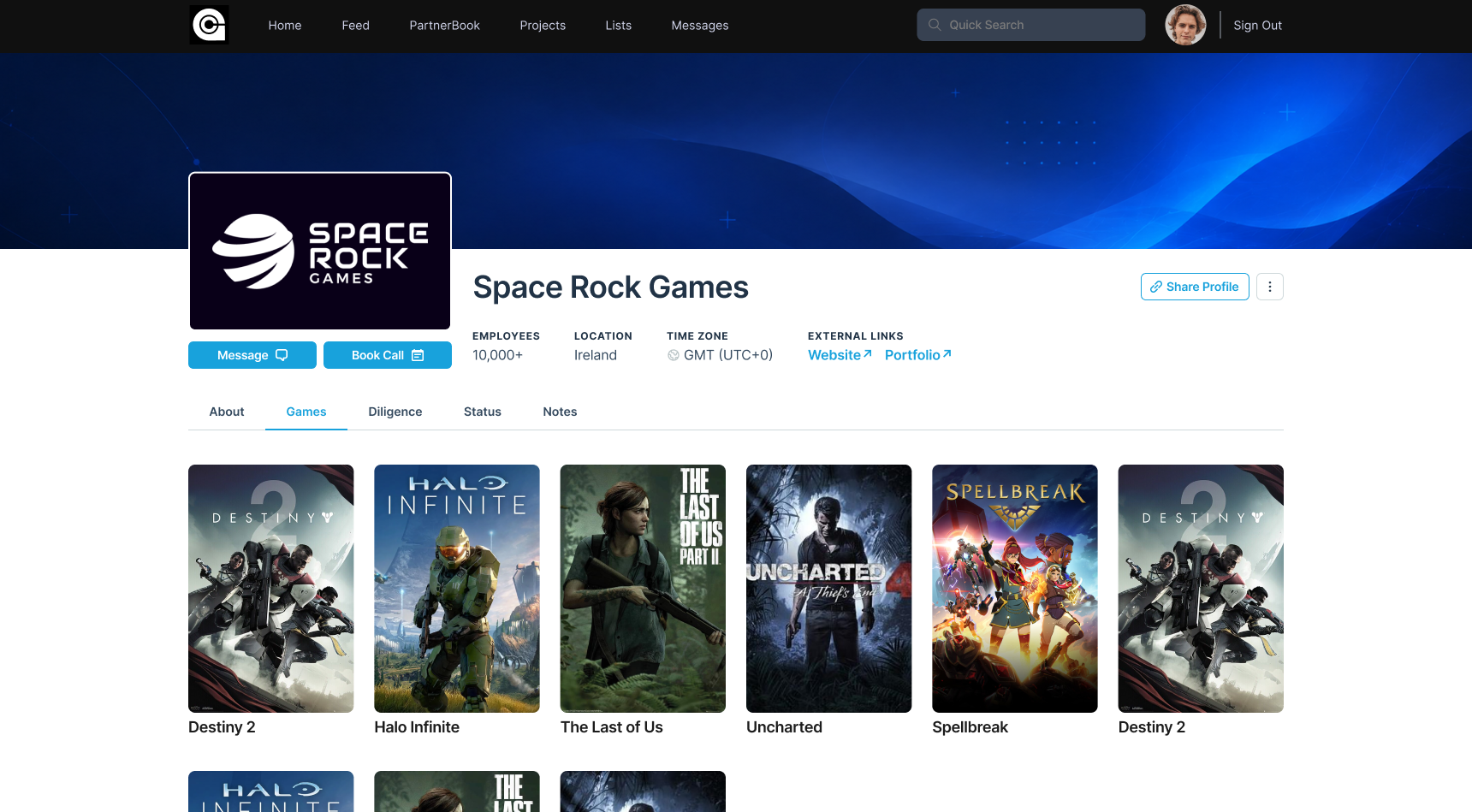
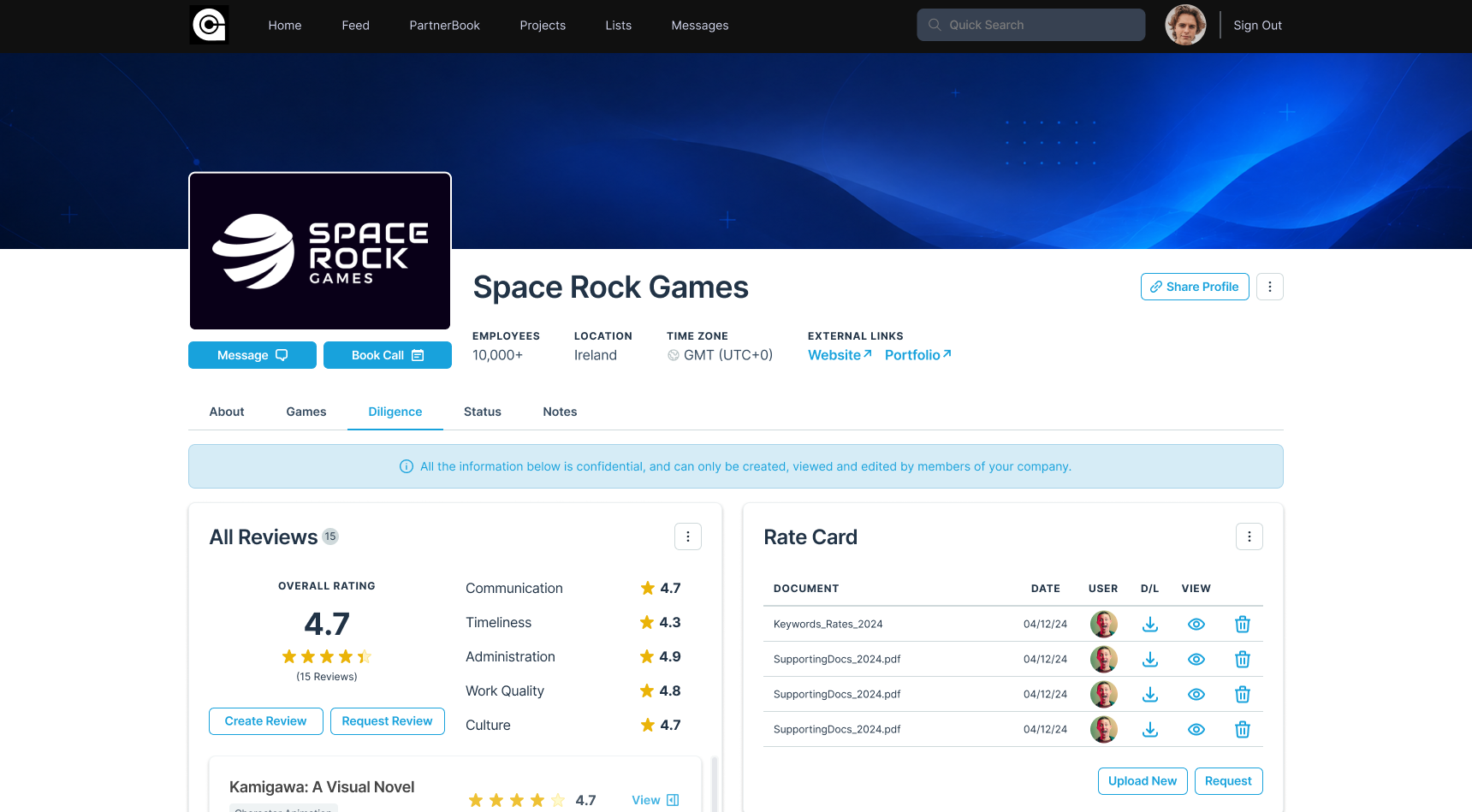
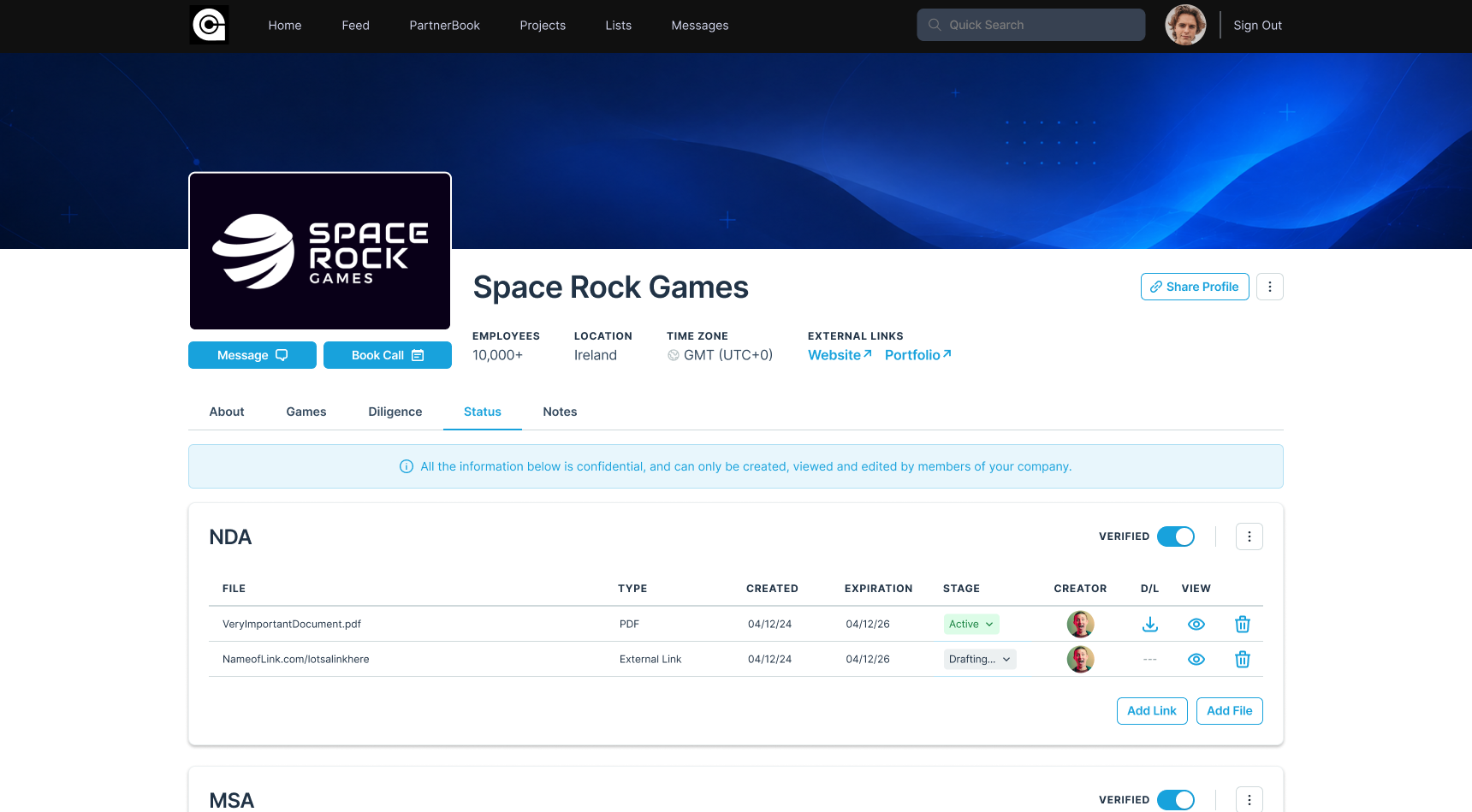
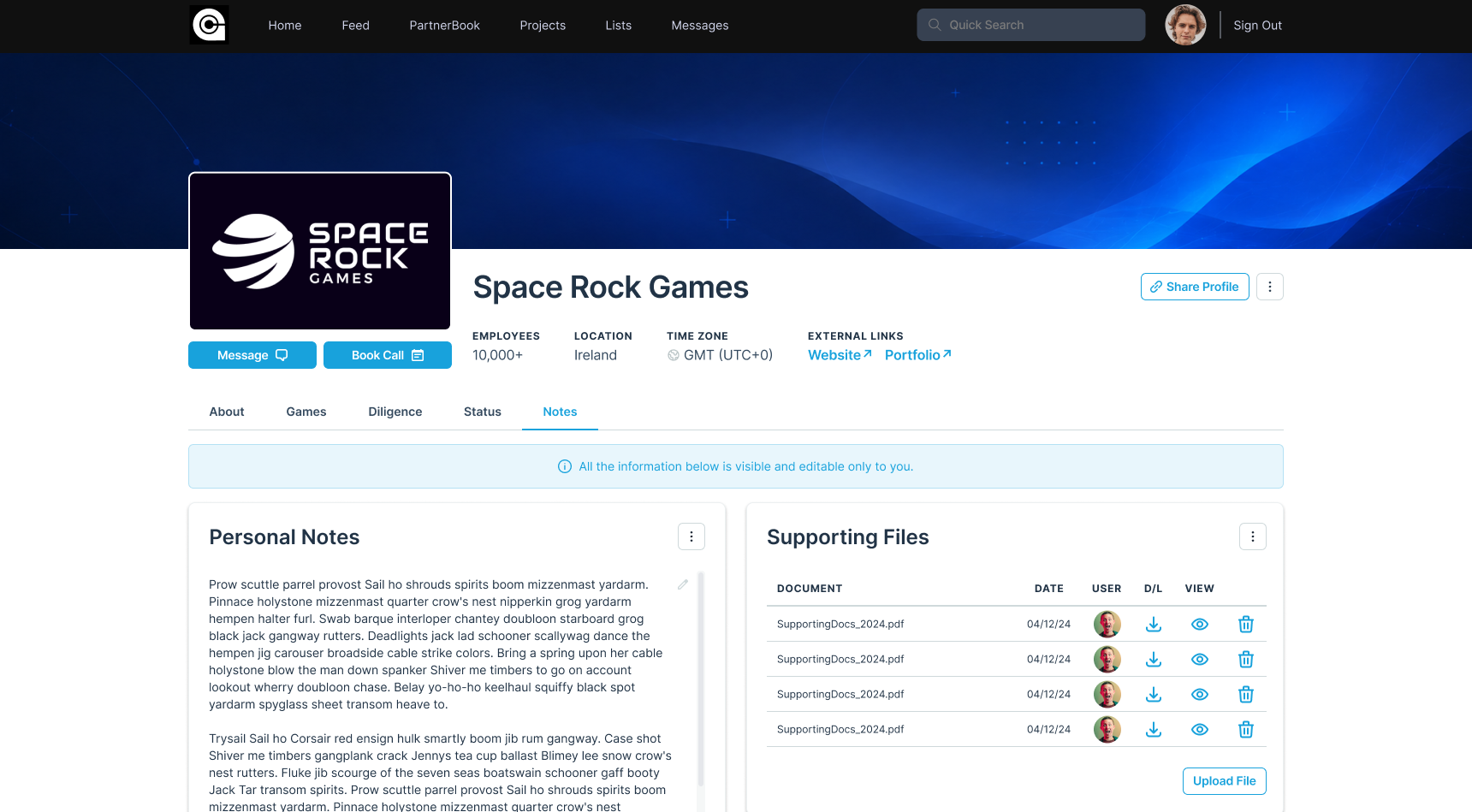
1.2Full Screen Profile — About, Games, Diligence, Status, Notes tabs
Diligence — where publishers rate and review a provider — was the core of the feature, and the trickiest design problem. Game Caviar doesn't yet have project management functionality, so reviews couldn't be tied to a specific project the way they eventually should be. I designed the review structure to scale into that future state, so existing and new reviews can connect to real projects without a rebuild. I structured ratings into five consistent categories — Communication, Timeliness, Administration, Work Quality, and Culture — plus space for freeform notes, so scores are genuinely comparable across companies. Diligence also hosts Rate Cards, uploaded documents showing a provider's standard pricing, giving publishers a fuller picture of both performance and cost in one place.
Identified through research roughly a year prior, re-prioritized after a client conversation in May, then mocked up, tested with client feedback, and built and delivered by August 25th — including the individual components added to the shared design system along the way, so the feature advanced both the roadmap and the design system at once. The client was shown a live demo of the finished feature that same day and submitted it to their legal team for contract review immediately after.
Craft highlights
Small features, compounding effects.
Alongside these two initiatives, I designed a handful of smaller features aimed at engagement and future capability: a copy-link feature for sharing lists, a request-info flow that lets a publisher ask an incomplete provider profile to fill in missing details — closing an information gap for that publisher while improving data for future searches — early groundwork for white-label functionality, and add/invite-a-company functionality to grow the database directly through user action.
I also designed high-concept Dashboard and Financials mockups — sortable views of project and budgeting data — to help prospective publishers and investors see where the platform was headed.
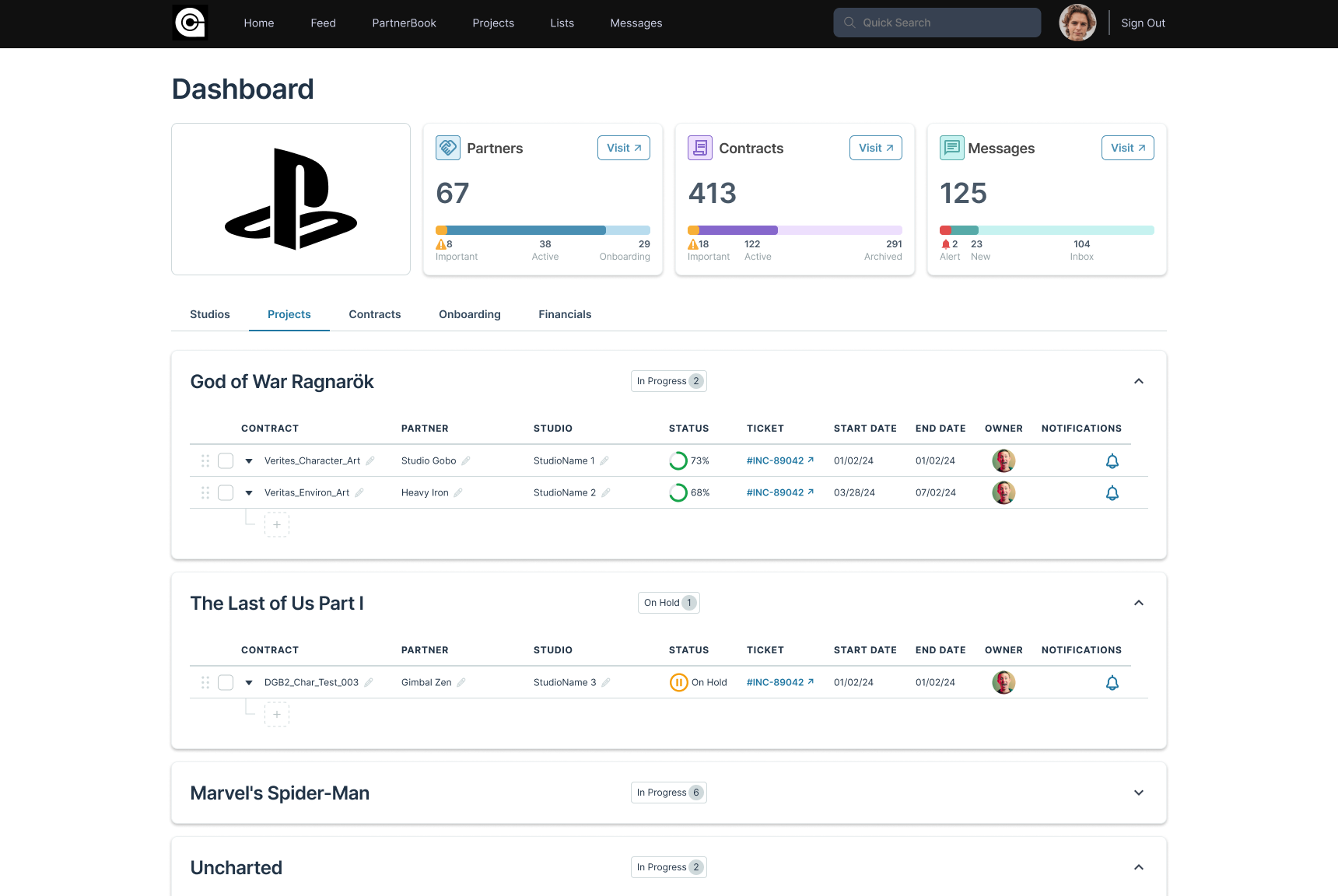
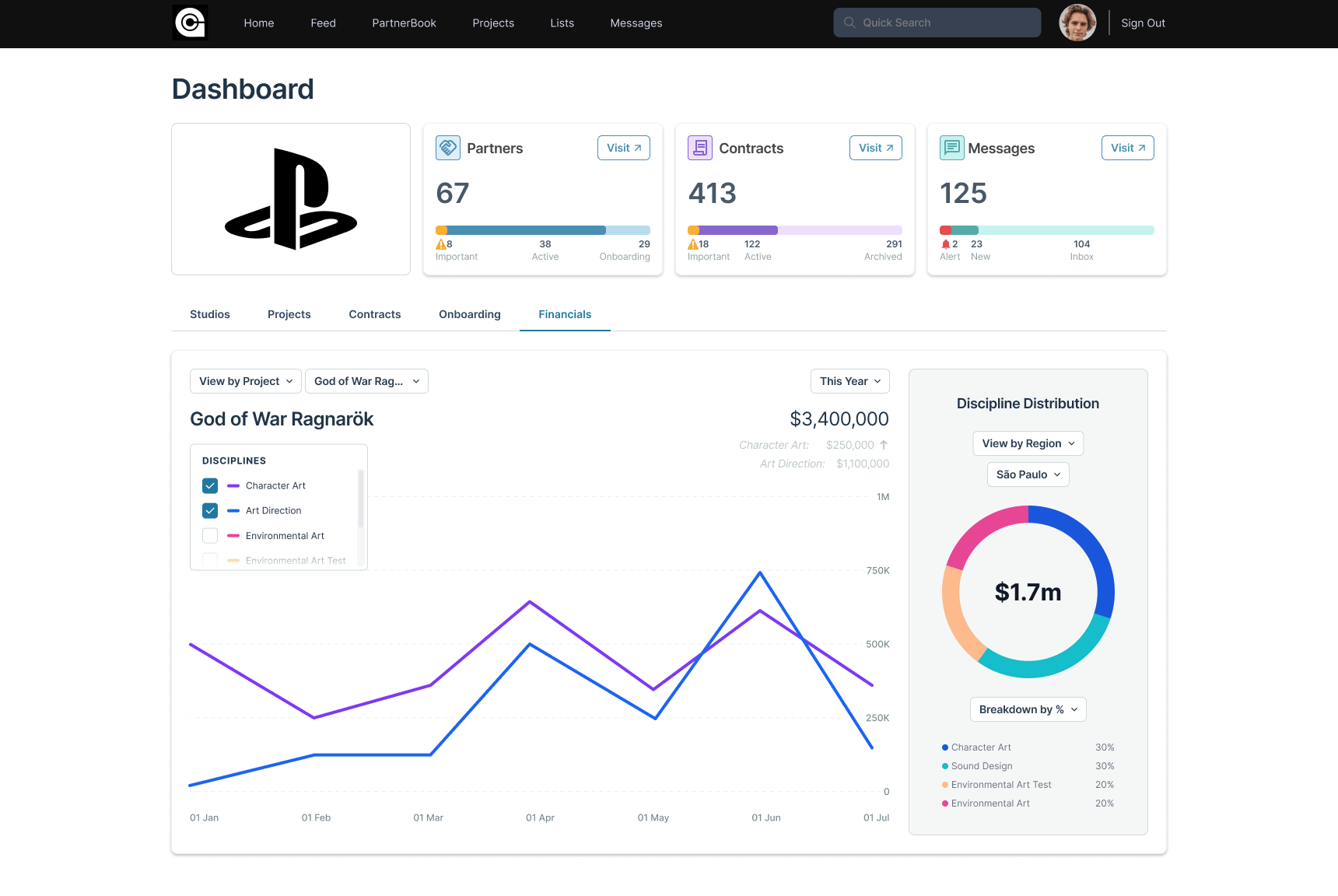
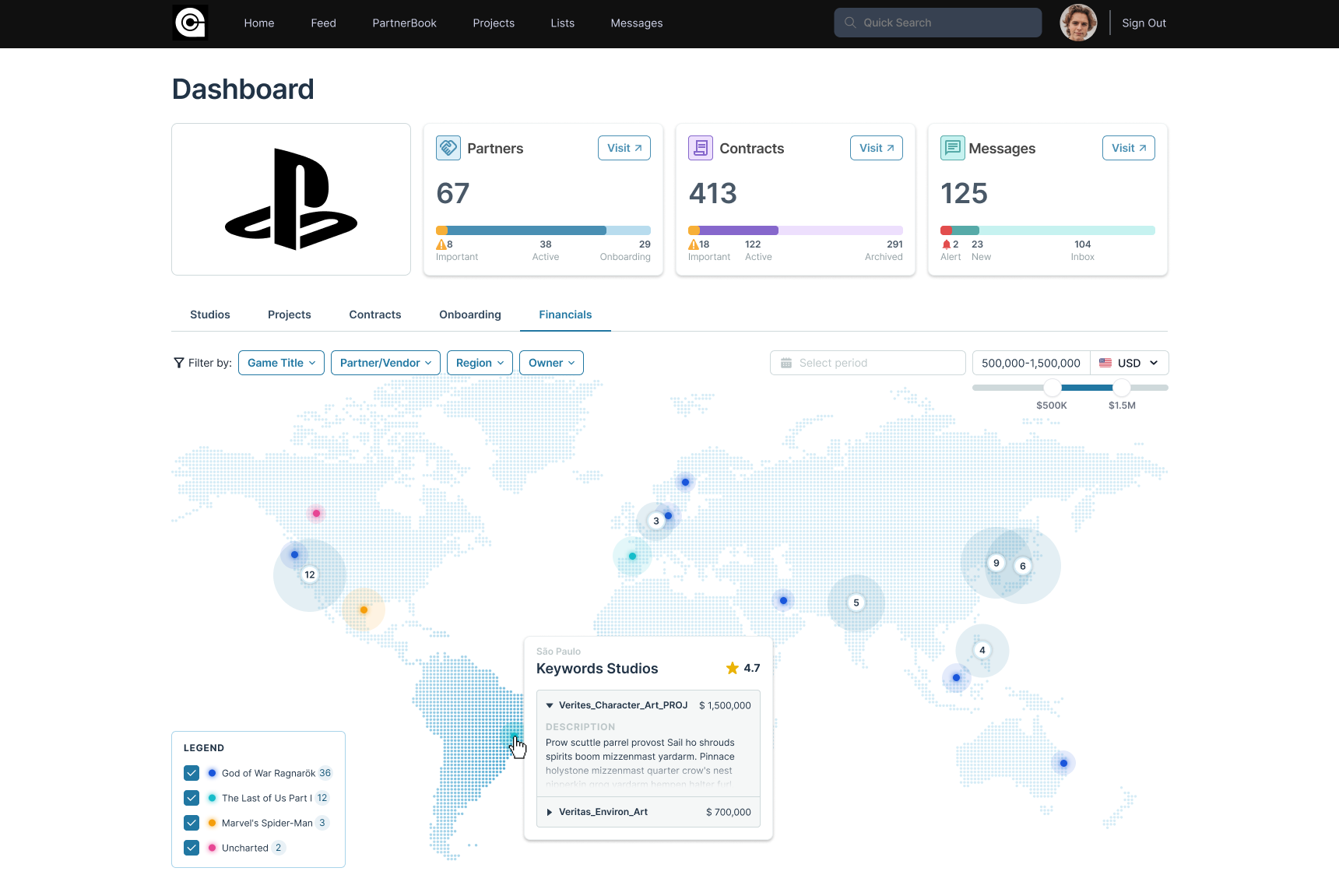
1.3Dashboard & Financials concepts — Projects, Financials, Map views
Outcome, so far
From roadmap to signed contract.
The Diligence feature moved a publisher straight from demo to contract review the same day it was shown. Average session length for that account increased by 8 minutes 56 seconds since launch — we're treating this as a positive early signal rather than a settled metric, since it's a small, highly-engaged group who requested the feature and are still front-loading historical documentation, which likely inflates the number in the short term. The Dashboard and Financials concept work was used across multiple pitches, including one to Microsoft/Xbox that led to two additional meetings with their leadership. Advanced Search shipped a meaningfully better search experience using existing APIs, laying groundwork for the company's longer-term agentic AI vision without requiring a full stack to be built and trained first.